“Citronella oil incorporated into active mulch films to combat insects in strawberry crops” – ACS Agricultural Science and Technology
Whether you're an amateur gardener or an industrial farmer, you may be familiar with mulches – plastic sheets placed over the soil to protect seedlings and promote plant growth. However, like many other plastic materials, these films can release harmful microplastics and have no insect repellent effect. So a team that gets in touch ACS Agricultural Science and Technology has developed an alternative biodegradable mulching film that also uses citronella oil to naturally repel pests.
“This research shows that it is possible to protect plants using biodegradable materials that reduce both pesticide use and plastic pollution. Our goal is to educate farmers about safer and more sustainable agricultural practices,” explains Camila Gil, the study's corresponding author.
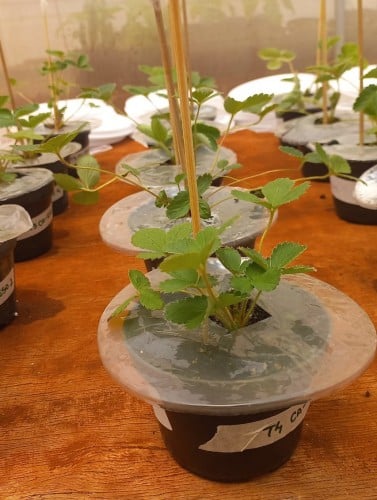
A new biodegradable alternative to traditional plastic film protected strawberry plants by naturally repelling pests with citronella oil. Photo credit: Camila Gil
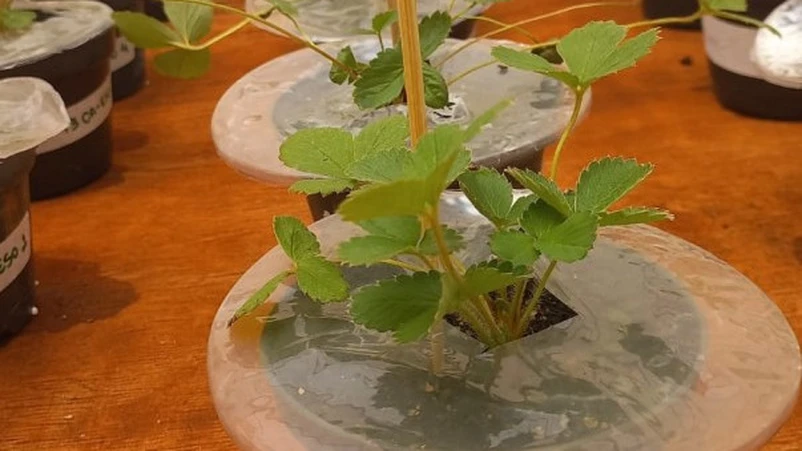
Mulching films retain moisture in the soil and prevent weeds from growing. However, they are often made of polyethylene plastic. This makes the films difficult to recycle and can release microplastics, which have a negative impact on soil organisms. Now scientists are developing biodegradable mulches using plant-based polymers such as cellulose acetate. Gil and colleagues wanted to improve a cellulose acetate film by incorporating the insect-repellent citronella oil. So the team created a robust film infused with citronella oil and examined how well this film protected strawberry plants from a common pest: the silverleaf whitefly (Bemisia tabaci).
The researchers created films with varying concentrations of citronella oil and found that the oil did not affect the strength or flexibility of the film. However, the new film did not retain moisture as well as conventional plastic films. To simulate a realistic application, the researchers covered the soil of strawberry plants with one of the various films and wrapped the structures in insect trapping nets. They then released about 25 whiteflies into the nets. This setup was repeated on an unprotected control plant and on a plant protected with polyethylene film. The team found that after seven days, pests laid about six eggs on plants protected with the films containing citronella oil, far fewer than the more than 30 eggs laid on plants with traditional plastic film or without soil protection. The researchers say this work represents a step toward a more environmentally friendly way to protect crops without the use of plastics or environmentally harmful pesticides.
The authors thank the Conselho Nacional de Desenvolvimento Científica e Tecnológico (National Council for Scientific and Technological Development), the Fundação de Amparo à Pesquisa de Minas Gerais (Foundation for Research Promotion of the State of Minas Gerais) and the Coordenação de Aperfeiçoamento de Pessoal de Niv́el Superior (Brazilian Federal Agency for the Support and Evaluation of Graduate Education) for funding.
The post A mulching film that protects plants without pesticides or plastics first appeared in the American Chemical Society Newsroom.
About the American Chemical Society
The American Chemical Society (ACS) is a nonprofit organization founded in 1876 and chartered by the U.S. Congress. ACS is committed to improving the lives of all people through the transformative power of chemistry. Its mission is to advance scientific knowledge, strengthen a global community, and advocate for scientific integrity, and its vision is a world built on science. The Society is a global leader in promoting excellence in science education and providing access to chemistry-related information and research through its many research solutions, peer-reviewed journals, scientific conferences, e-books and weekly news magazine Chemical & Engineering News. ACS journals are among the most cited, trusted, and widely read journals in the scientific literature; However, ACS itself does not conduct any chemical research. As a leading provider of scientific information solutions, the CAS division works with global innovators to accelerate breakthroughs by curating, connecting and analyzing the world's scientific knowledge. ACS's main offices are in Washington, DC and Columbus, Ohio.