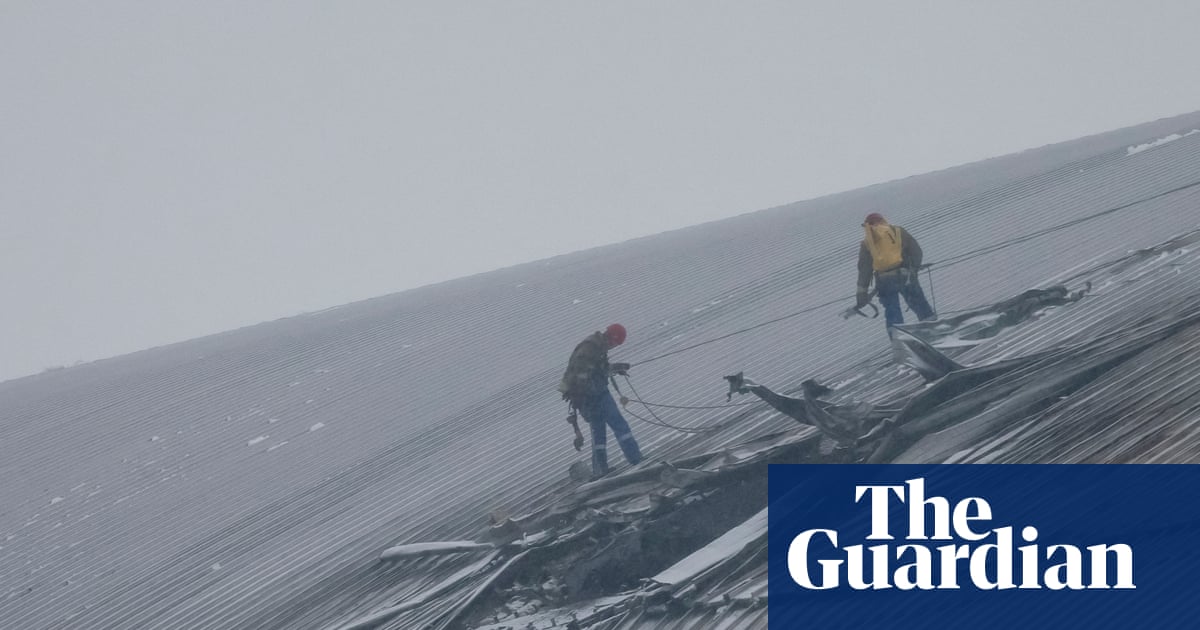
The protective shield over Ukraine's Chernobyl nuclear reactor, which was hit by a drone in February, can no longer perform its primary function of blocking radiation, the International Atomic Energy Agency (IAEA) said.
In February, a drone strike blasted a hole in the “new secure container” that was painstakingly built next to the destroyed reactor at a cost of 1.5 billion euros ($1.75 billion) and then transported into place on rails. The work was completed in 2019 by a European-led initiative. The IAEA said an inspection of the steel containment structure last week found the drone strike had damaged the structure.
The Chernobyl explosion in 1986 – which occurred when Ukraine was under Moscow's rule as part of the Soviet Union – sent radiation across Europe. To contain the meltdown, the Soviets built a concrete “sarcophagus” over the reactor with a lifespan of just 30 years. The new container was built to contain radiation during the decades-long final removal of the sarcophagus, the destroyed reactor building beneath it, and the melted nuclear fuel itself.
IAEA Director General Rafael Grossi said an inspection mission “confirmed that the… [protective structure] had lost its primary safety functions, including containment capability, but also noted that there was no permanent damage to its supporting structures or surveillance systems.”
Grossi said some repairs have been made, “but comprehensive restoration remains essential to prevent further deterioration and ensure long-term nuclear safety.”
The UN reported on February 14 that Ukrainian authorities said a drone with a high-explosive warhead hit the power plant, causing a fire and damaging protective casing around the reactor. Ukrainian authorities said the drone was Russian. Moscow denied attacking the plant.
Radiation levels remained normal and stable and there were no reports of radiation leaks, the United Nations said in February.
Russia occupied the power plant and the surrounding area for more than a month in the first weeks of its invasion of Ukraine in February 2022, when its forces initially tried to advance on the Ukrainian capital, Kiev.
The IAEA carried out the inspection at the same time as a nationwide investigation into damage to substations caused by the war between Ukraine and Russia.
With Reuters