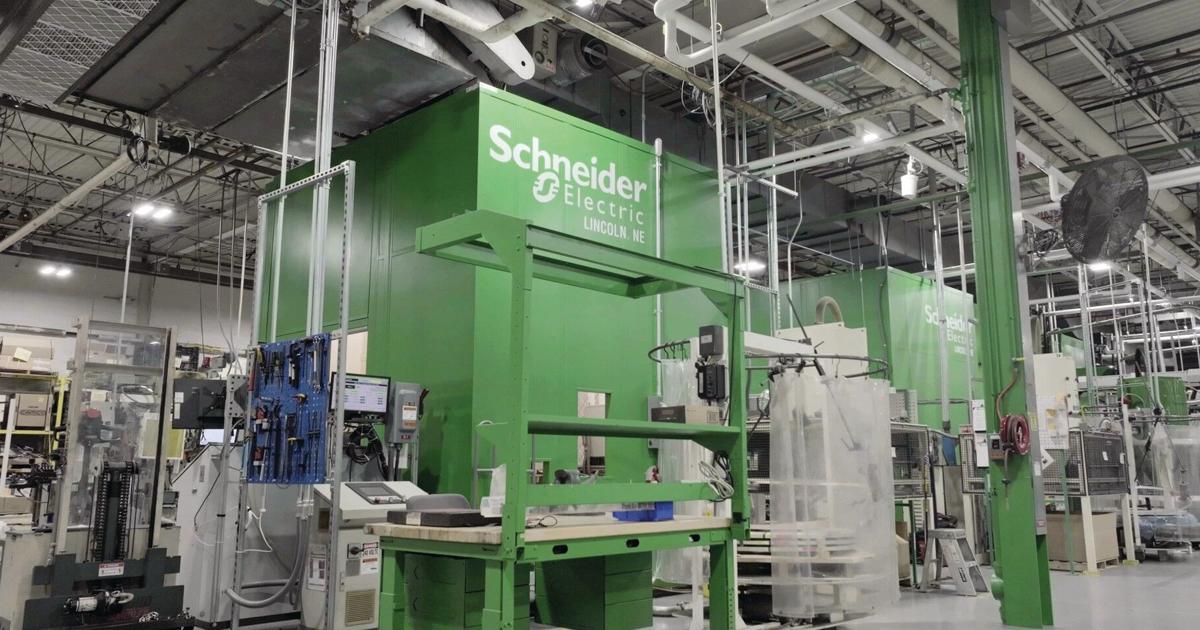

The waste heat recovery project at the Lincoln plant has already achieved a 360 tonne reduction in Scope 1 carbon emissions and a 60% improvement in heating energy efficiency.
How do you transform a 50-year-old manufacturing facility into a model of modern sustainability? That's the challenge Schneider Electric USA Inc. faced at its 213,500-square-foot (19,835-square-meter) facility in Lincoln, Neb., which operates around the clock and produces injection-molded circuit breakers primarily for the residential market. The factory is the company's second-largest energy consumer in North America, contributing approximately 840 tons of Scope 1 (direct) CO₂ emissions, according to 2023 data.
“Sustainability is at the heart of everything we do,” says Agustin Lopez Diaz, supply chain officer for North America at Schneider Electric. “So this project came about about two and a half years ago when we were looking at the question: 'How can we advance our SBTi (Science-Based Targets Initiative) roadmap for 2030 net zero readiness in our factories?'”
To begin the process of decarbonizing the facility, Schneider Electric enlisted the support of two strategic partners with whom the company already had strong working relationships: Fremont, Ohio-based World Energy Innovations LLC (WEI), a clean energy technology company, and Control Services Inc. (Omaha, Neb.), which specializes in turnkey building automation and systems integration.
“Control Services is actually part of our EcoXpert partner program and certified for our EcoStruxure solutions,” notes Diaz, “so this partnership was kind of a natural fit.”
An innovative solution
The first step of the project was for WEI to conduct a feasibility study for fully electrifying the heating, ventilation and air conditioning (HVAC) system at the Lincoln plant, taking into account the challenge of Nebraska's cold winter climate.
“We have completed many energy efficiency projects for industrial facilities over our 45-year history,” says Ed Kiser, technical director at WEI. “For the feasibility study, it's about us learning what I would call the DNA of the building. First, we analyze the existing HVAC system to develop a conceptual design that is able to reuse as much of that system as possible to offset the cost of the changes we recommend.”
Ultimately, WEI submitted a proposal to use the waste heat from the manufacturing process to comfortably heat the factory halls and offices. With this approach, Schneider Electric would not have to change its current electrical system and could repurpose existing HVAC equipment by using chilled water coils to heat the air to 75°F with process cooling water. However, for this method of “low-temperature hot water production” to be successful, the building would have to be under excess pressure.
“Prior to our system, the heat generated by electricity at the Lincoln plant was a waste stream and had to be disposed of through the cooling tower,” explains Kiser. “Now we're able to recover that heat to keep the building warm. So we're reducing their operating costs and at the same time we're reducing their net emissions.”
Positive pressure in the system – so that air is pushed from the inside to the outside rather than the other way around – would have its own advantages. “Supplying more outside air than exhaust prevents cold air from entering the building, especially in loading dock areas, thereby eliminating winter cold spots,” notes Kiser. “And air quality is also improved because potential pollutants that may arise during a process are better directed into the exhaust systems to remove them from the building.”
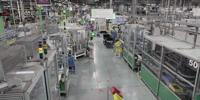
The Lincoln location employs nearly 400 team members.
A joint effort
Control Services, a 51-year-old family business, played a key role in helping Schneider Electric make the necessary changes to implement the WEI recommendations. This primarily involved modernizing the Lincoln plant's building management system to better control HVAC equipment.
“The team we selected at Control Services really knew this facility, so we were able to identify many issues in advance because each facility has its own nuances,” says Denise Kuehn, vice president of business development for Control Services. These “gotchas” included factors such as positioning the sensors to capture accurate external weather data without interference from external obstacles. “We also understood the concept of heat recovery because we had done similar things at other sites and that, along with WEI’s knowledge and willingness of their team, was very helpful.”
Based on WEI's design and sequence, Control Services undertook the local installation, cabling and control integration to modernize the building automation system and ensured that the factory's chilled water system was rerouted and controlled to enable automatic switching between heating and cooling modes.
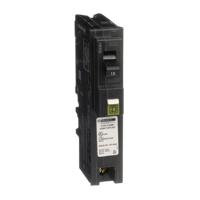
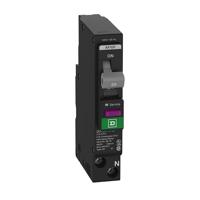
Molded circuit breakers manufactured at the Lincoln plant.
Throughout the complex renovation process, Schneider Electric had a parallel focus: avoiding production disruptions. “We were in the process of increasing capacity dramatically,” says Diaz. “We were in the middle of one of our largest launches in the region, so it was critical for us that there were no disruptions.” But thanks to the seamless collaboration with WEI and Control Services, we “didn’t stop the system for a second,” even when challenges arose – such as long lead times for key HVAC system components.
The project began in September 2023 and took 15 months from start to finish, including WEI's feasibility study, an intensive design and engineering phase, and nine months for actual execution, Diaz notes. Monitoring, testing and validation followed. Overall, “everything was mastered so that we didn’t have any major hurdles,” he adds.
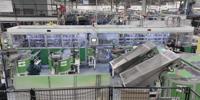
The Lincoln facility operates 24 hours a day and produces injection molded circuit breakers primarily for the residential market.
Efficiency and commitment
According to a case study written by Anand Varahala, director of energy and sustainability at Schneider Electric, and Natalie Boyd, sustainability project manager, the transformation of the Lincoln plant has already produced measurable results. Comparing data between winter 2023/24 and winter 2024/25, the study found that the facility achieved the following:
- Energy savings of 6,000 MMBtu (million British thermal units), which represents a cost saving of $55,000
- A reduction in Scope 1 carbon emissions of 360 tonnes, along with a 60% improvement in heating energy efficiency
- Improved air quality and improved living comfort through positive building pressure
Diaz says the benefits extend beyond energy efficiency to employee engagement. “When the (nearly 400-person) factory team sees Schneider's sustainability in practice, they turn to the factory manager and express it. They feel the impact of what we do in the workshop and tell us.” This enthusiasm is also reflected in the assessment of team members' commitment, he adds.
Schneider Electric is not finished with its work at the Lincoln plant. The waste heat recovery project was the first phase of a two-stage initiative; The next step includes the introduction of a geothermal heat pump and the elimination of the last steam boiler to completely eliminate the use of fossil fuels for the heating, ventilation and air conditioning (HVAC) technology of the facility.
Further studies are planned to examine how Schneider Electric can use the low-temperature heating concept at its other locations around the globe and with the customers it supports through its internal sustainability practices, Diaz says.
While partners WEI and Control Services deserve praise for their critical contributions, Joe Soldano, vice president of sales and marketing at WEI, credits Schneider Electric for driving the effort with “leadership and commitment to sustainability.” Your ambitious goal made this possible.
For more information about Schneider Electric USA Inc., visit www.se.com or call 877-342-5173. For more information about World Energy Innovations LLC, visit www.worldenergyinnovations.com or call 419-333-2111. For more information about Control Services Inc., visit www.controlservices.com or call (402) 339-4344.