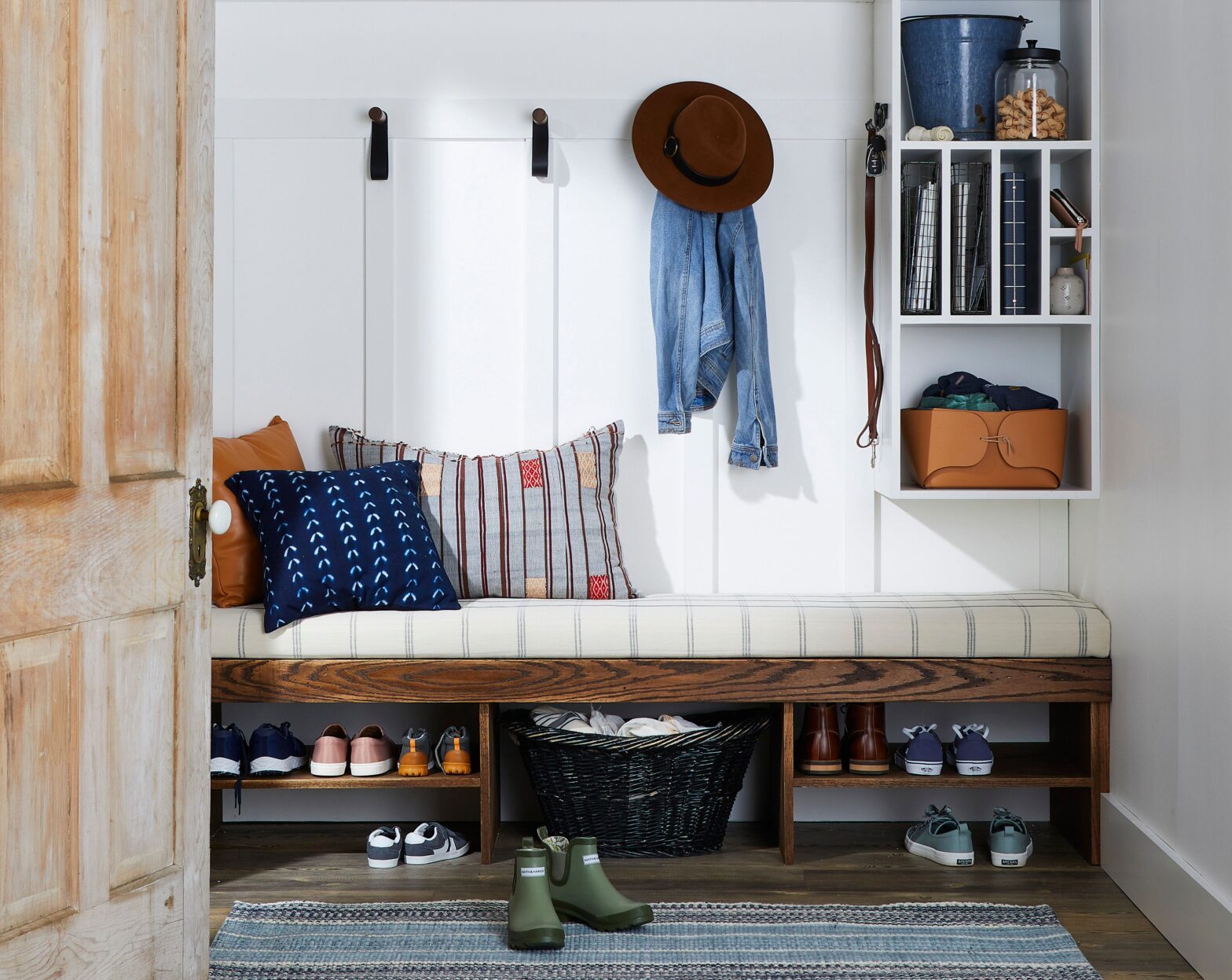
The latest home organizing trends are all about balance: practical storage solutions that fit your life, systems that adapt to your needs, and curated details that make a space feel lived in. Think less about “perfect Pinterest board” and more about “functionally organized home.”
The New Year is also about giving your home personality again. While neutral tones, minimalism and perfectionism have long prevailed, people today crave spaces that are functional, accessible and personal. If you feel the same way, consider this year as an opportunity to take advantage of home organization methods and storage solutions that will actually make your life easier instead of more stressful.
To help you take control of your space, professional home organization experts reveal the top home storage trends of 2026.
1. Careful curation
According to professional organizing duo Meg DeLong and Ea Fuqua, the coming year is about curating what you keep instead of throwing it all away. “We see that people are very conscious of their keepsakes,” says DeLong. People are also realizing that their home doesn't have to look empty to feel calm. “We're seeing shelves designed with personality; think children's art alongside vintage finds and containers that look just as good as what's inside,” says Fuqua.
The professional organizers suggest setting up a keepsake shelf or keepsake cabinet as a dedicated space to display your most treasured items. “[It] allows you to capture what's important without feeling buried in things,” says DeLong. If you prefer to store certain things away, whether for personal reasons or to protect them, use a container or container made of the right material (such as one that's considered acid-free for storing photos and documents) and label it so you always know where your memorabilia is stored.
2. A twist on minimalism
While they don't believe minimalism is a completely dead trend, the two agree that it will take on a different look in 2026. Instead of being sterile, it will feel warmer and combine simplicity with comfort through the use of textures, natural wood and personal touches. “It's uncluttered but lived-in, and it's about simple spaces that still have heart,” Fuqua says.
If you no longer like the all-white, coordinated storage solutions that line your shelves and countertops, try swapping them out for more unique pieces that will add warmth and color to your home. It doesn't have to be flashy and bright, just something that is visually interesting or made of organic materials. Do you love being frugal? Give used finds, like a rattan basket, a purpose by using them as both decoration and storage.
3. Stay sustainable
Sustainability is not just a trend, but a lifestyle. It's not just about buying storage solutions made from eco-friendly materials, it's also about buying things that last. When you buy well-made, durable pieces (regardless of material), you inevitably prevent cheap, fragile items from ending up in landfills. And while organizational supplies made from organic materials are becoming more widely available, it's okay to use high-quality plastic containers (such as those made from polyethylene terephthalate, or PET) if that's better for your budget.
4. Keep it simple
Sometimes (OK, most of the time) the simplest systems get stuck. The best storage solutions are ones that make your life easier. The easier it is to maintain your system, the more likely you are to keep up with it. Some ways to accomplish this are to keep labels simple (e.g., “snacks” for the pantry basket), place Lazy Susans on hard-to-reach shelves for convenience, and place a bin near the entrance for items that need to be returned.
Simplifying your home requires not only setting up these systems, but also clearing out the things you don't need, like a highly specialized kitchen appliance that never gets used or a pair of jeans that haven't fit in a decade.
5. Flexible solutions
Our lifestyles can change, so you should think ahead and choose storage and organization methods that adapt to you. “The trend of 2026 is flexibility: carts, modular cubes and pieces that can move from office to playroom to guest area in minutes,” says DeLong.
Even if you're not moving (be it upsizing or downsizing), there are still many life changes that can impact your home. Welcoming a newborn, sending children to college, getting married, getting divorced, changing careers, or retiring are just a few examples that can significantly impact the way you use your space. As DeLong points out, “Systems that once worked may no longer accommodate your evolving lifestyle.”
That's why it's important to use flexible systems and products that allow you to adapt as needed. “We love stackable drawers, adjustable shelves, and storage that grows with your family (or shrinks if you're ready to simplify),” says Fuqua. “The goal should always be to make your space work for you.”